
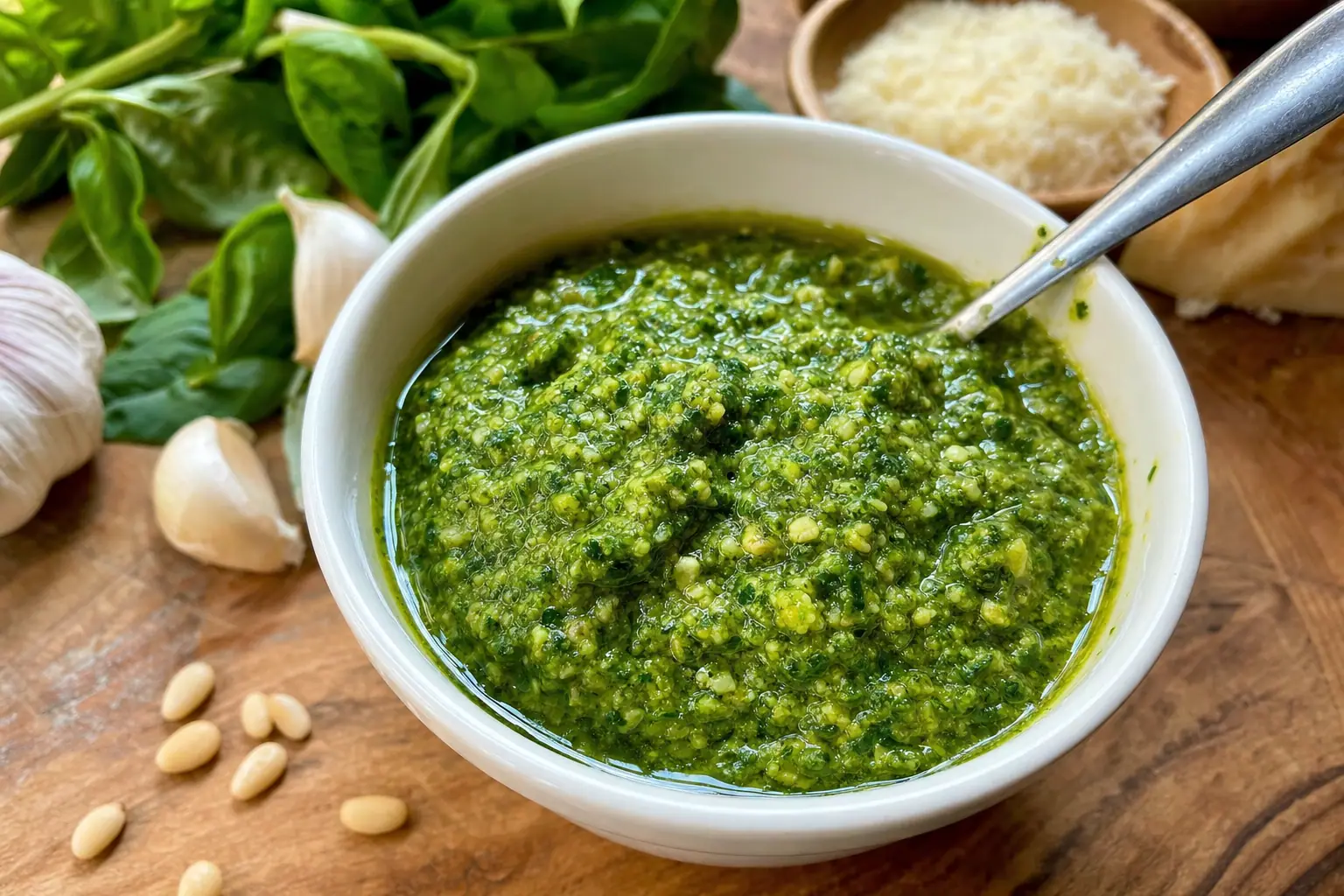
Classic Basil Pesto
Fresh basil, garlic, pine nuts, Parmesan, and olive oil turn into a bright green sauce in minutes. Toss it with pasta, spoon it over eggs, or spread it on sandwiches.
Total
13 min
Servings
Makes about 1 cup, enough for 1 pound of
Level
Easy
Pesto is a simple Italian sauce made by crushing herbs, nuts, cheese, garlic, and olive oil together. The name comes from the Italian word pestare, which means “to pound,” because it was traditionally made with a mortar and pestle.
This version uses a food processor for speed, but the flavor stays close to the classic: basil-forward, savory, and rich without being heavy. Toasting the pine nuts is optional, but it adds a gentle nutty flavor.
Use pesto as a pasta sauce, a sandwich spread, a dip for bread, or a spoonable finish for roasted vegetables, chicken, fish, or soup.
01What you'll need
Ingredients
8 items · Makes about 1 cup, enough for 1 pound of
- 2 packed cups fresh basil leaves, thick stems removed
- 1/3 cup pine nuts
- 1 small garlic clove, peeled and roughly chopped
- 1/2 cup finely grated Parmesan cheese
- 1/2 teaspoon fine sea salt, plus more to taste
- 1/4 teaspoon freshly ground black pepper
- 1/2 cup extra-virgin olive oil, plus more for storing
- 1 to 2 teaspoons fresh lemon juice, optional
02How to make it
Step-by-step
1. Toast the pine nuts
Place the pine nuts in a dry small skillet over medium-low heat. Cook for 2 to 3 minutes, shaking the pan often, until they smell nutty and turn light golden in spots. Tip them onto a plate to cool. Watch closely, because pine nuts can burn quickly.
2. Prep the basil
Rinse the basil only if it is gritty, then dry it very well with a clean towel or salad spinner. Too much water can make the pesto thin and dull the flavor. Remove any tough stems.
3. Pulse the dry ingredients
Add the cooled pine nuts, garlic, Parmesan, salt, and pepper to a food processor. Pulse a few times until the mixture is finely chopped but not paste-like.
4. Add the basil
Add the basil leaves to the food processor. Pulse in short bursts, scraping down the sides as needed, until the basil is chopped and mixed with the nuts and cheese.
5. Stream in the oil
With the food processor running, slowly pour in the olive oil. Stop as soon as the pesto looks saucy and mostly smooth, with a little texture. Avoid over-blending, which can make basil taste bitter.
6. Taste and adjust
Taste the pesto. Add more salt if it tastes flat. Add lemon juice if you want a brighter flavor, especially if you plan to use it on vegetables, fish, or sandwiches.
7. Use or store
Use the pesto right away, or spoon it into a clean jar. Smooth the top and cover it with a thin layer of olive oil to help protect the color. Refrigerate promptly.
03From our kitchen
Cook's tips
- Make-ahead: Pesto is great made a day ahead. The garlic flavor gets stronger as it sits, so use a small clove if you are making it in advance.
- Storage: Keep pesto in an airtight container in the refrigerator for 3 to 4 days. Cover the surface with a thin layer of olive oil to slow browning. Do not leave pesto at room temperature for long periods.
- Freezing: Freeze pesto for up to 3 months. Spoon it into an ice cube tray, freeze until solid, then transfer the cubes to a freezer bag. Thaw only what you need.
- Nut swaps: Replace pine nuts with walnuts, almonds, cashews, or pistachios. For a nut-free pesto, use sunflower seeds or pumpkin seeds.
- Cheese swaps: Pecorino Romano gives a saltier, sharper flavor than Parmesan. For a dairy-free version, skip the cheese and add 1 to 2 tablespoons nutritional yeast, then adjust the salt.
- Basil color: Basil browns when it is bruised or exposed to air. Use fresh leaves, blend briefly, and store with oil covering the surface. A little lemon juice can help, but it will change the flavor slightly.
Cook's note
For pasta, reserve about 1 cup of the starchy pasta cooking water before draining. Toss 1 pound hot pasta with the pesto off the heat, adding splashes of pasta water until the sauce loosens and coats the noodles. Heating pesto directly can darken the basil and mute its fresh flavor.
04Frequently asked
Questions & answers
Can I make pesto without a food processor?
Yes. Use a mortar and pestle for a traditional texture, or chop the basil, garlic, nuts, and cheese very finely by hand, then stir in the olive oil. It will be chunkier, but still delicious.
Why did my pesto turn brown?
Basil browns when it oxidizes, which means it reacts with air. To help prevent this, dry the basil well, blend briefly, and cover stored pesto with a thin layer of olive oil. It is usually still safe to eat if it has been refrigerated properly and smells fresh.
Can I use dried basil instead of fresh basil?
Dried basil is not a good swap here. Pesto depends on the fresh leaves for its color, moisture, and flavor. If you are short on basil, replace up to half with fresh parsley, spinach, arugula, or cilantro.
How much pesto do I need for pasta?
Use about 1/2 to 1 cup pesto for 1 pound of pasta, depending on how saucy you like it. Add reserved pasta water a little at a time to help the pesto coat the noodles.
Is pesto served hot or cold?
Pesto can be served cold, room temperature, or gently warmed by tossing it with hot food. Avoid boiling or frying it, because high heat can make the basil darker and less fresh-tasting.
05Keep cooking
You might also like
 Salads & sides
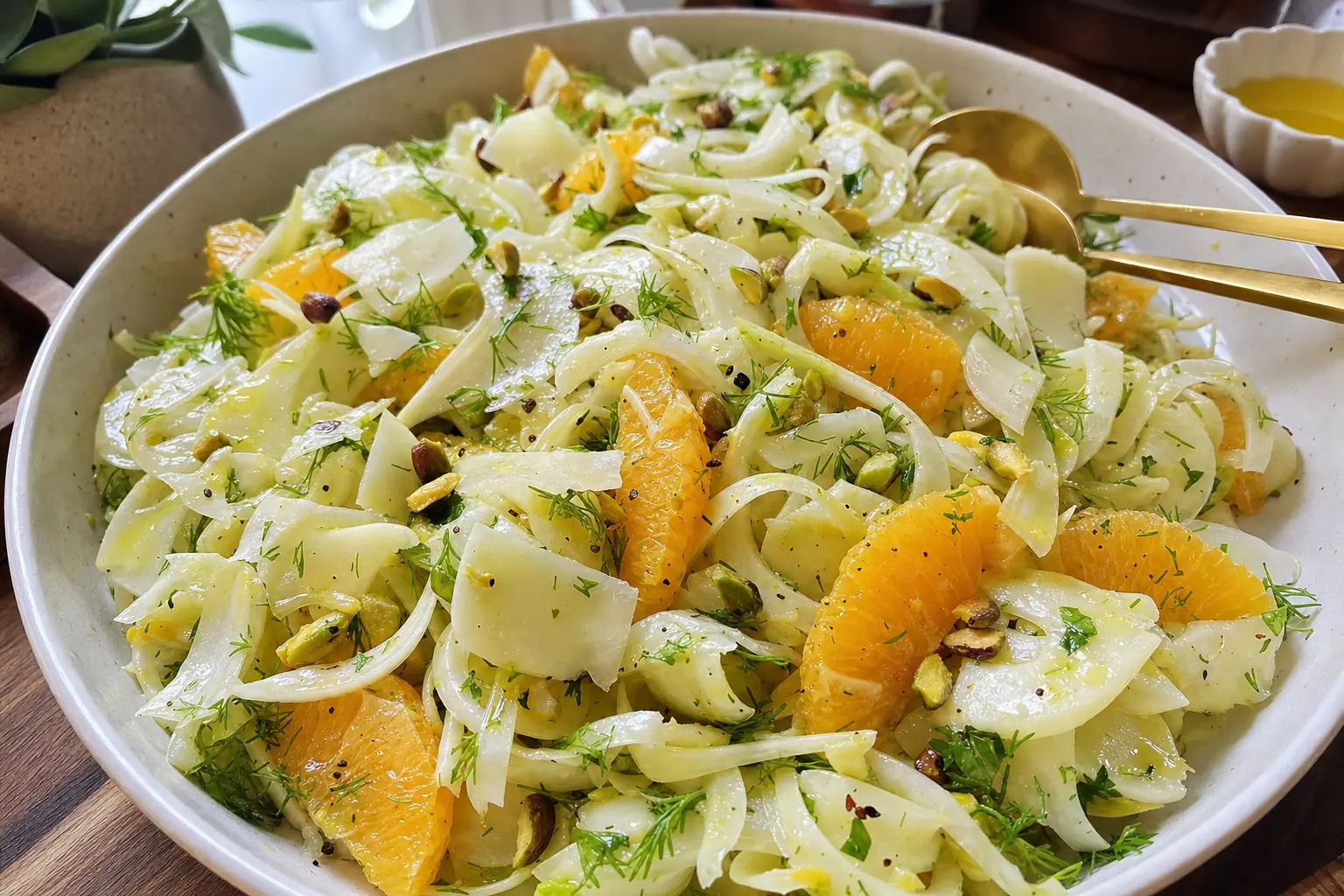
Crisp Fennel Salad with Orange and Lemon Dressing
This fresh fennel salad is crunchy, juicy, and bright, with sweet orange slices, salty Parmesan, and a simple lemon-olive oil dressing. It is a good side for fish, chicken, pasta, or any meal that needs something crisp.
 Salads & sides
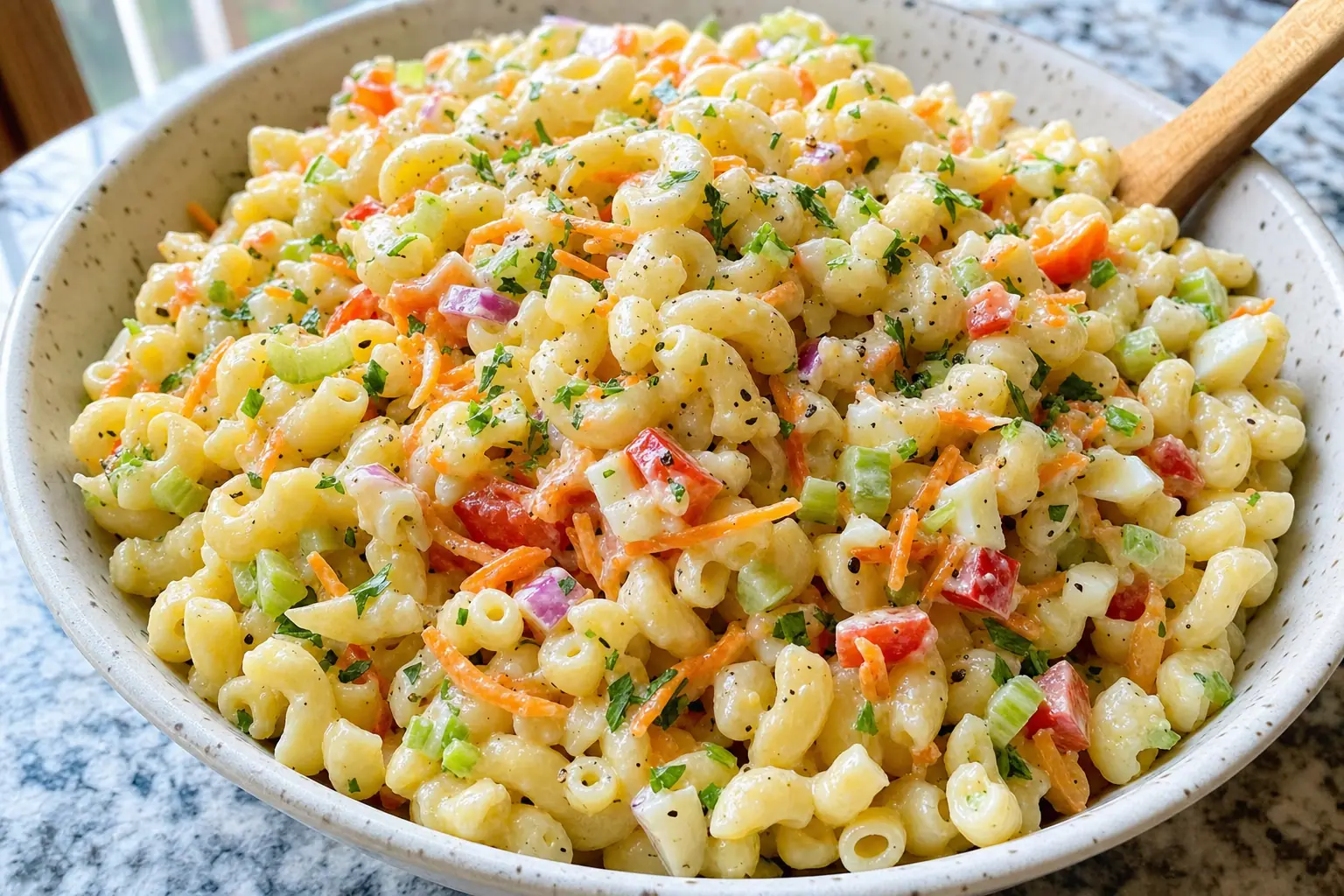
Classic Macaroni Salad
Creamy, tangy, and full of crunch, this macaroni salad is the kind of side dish that fits right in at picnics, cookouts, and easy lunches. A quick rinse after cooking keeps the pasta firm and ready for its simple, mayo-m
 Salads & sides
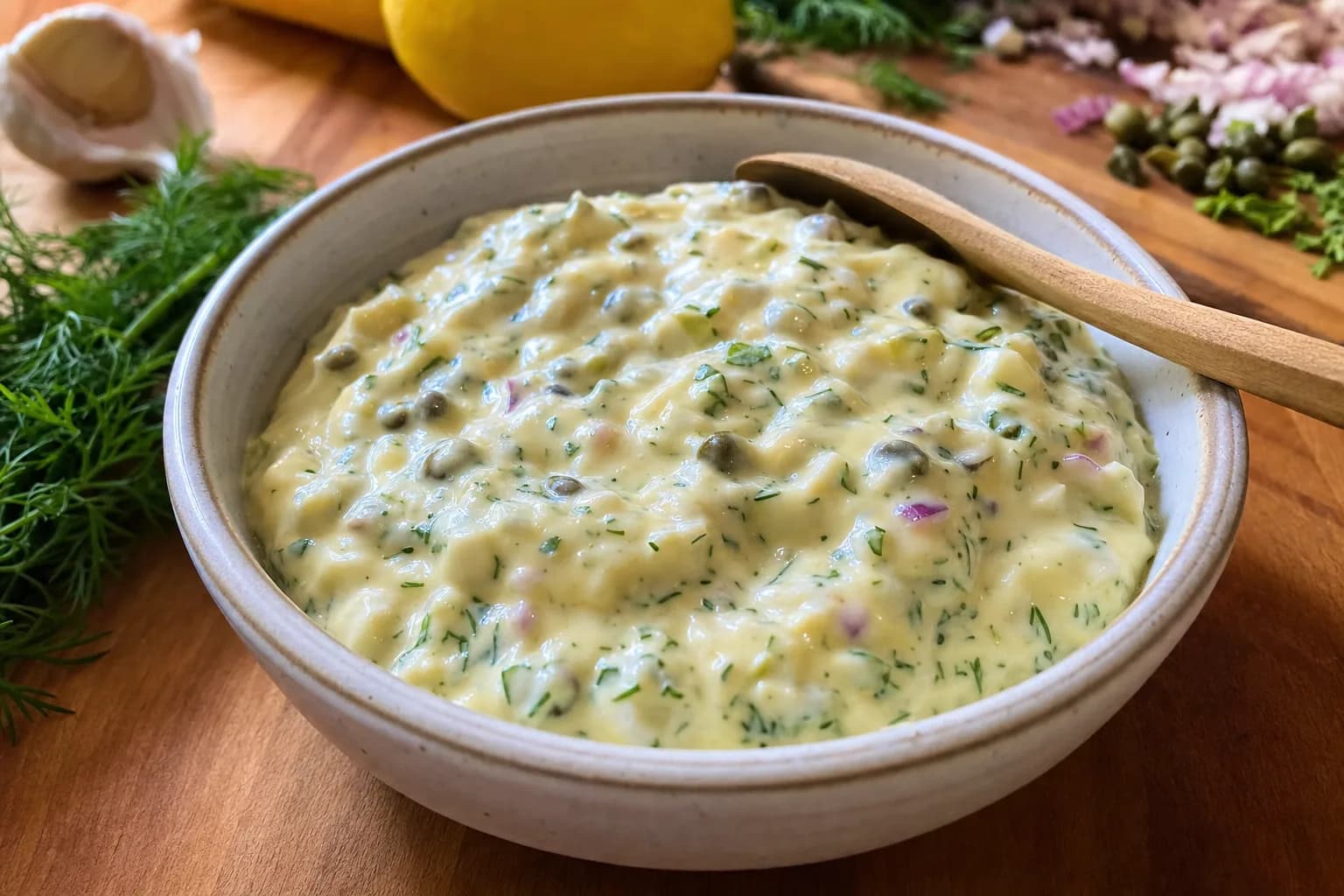
Classic Tartar Sauce
This creamy tartar sauce is bright, tangy, and easy to stir together in about 10 minutes. Serve it with fish sticks, fried seafood, crab cakes, or roasted potatoes.
 Salads & sides
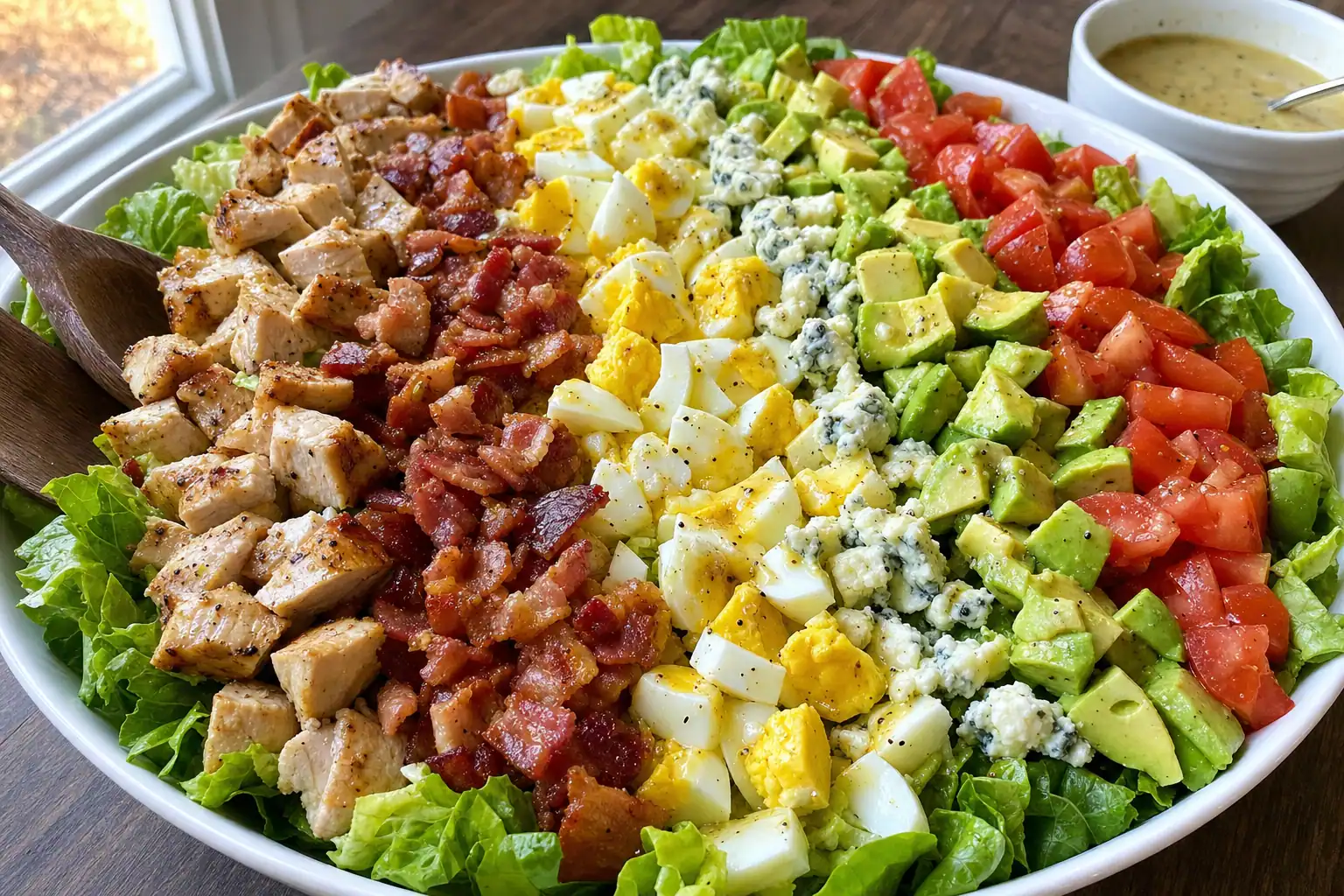
Classic Cobb Salad
A Cobb salad is a full meal in a bowl: crisp lettuce, juicy chicken, bacon, eggs, avocado, tomatoes, and blue cheese with a sharp red wine vinaigrette. It is colorful, practical, and easy to adjust with what you have.