
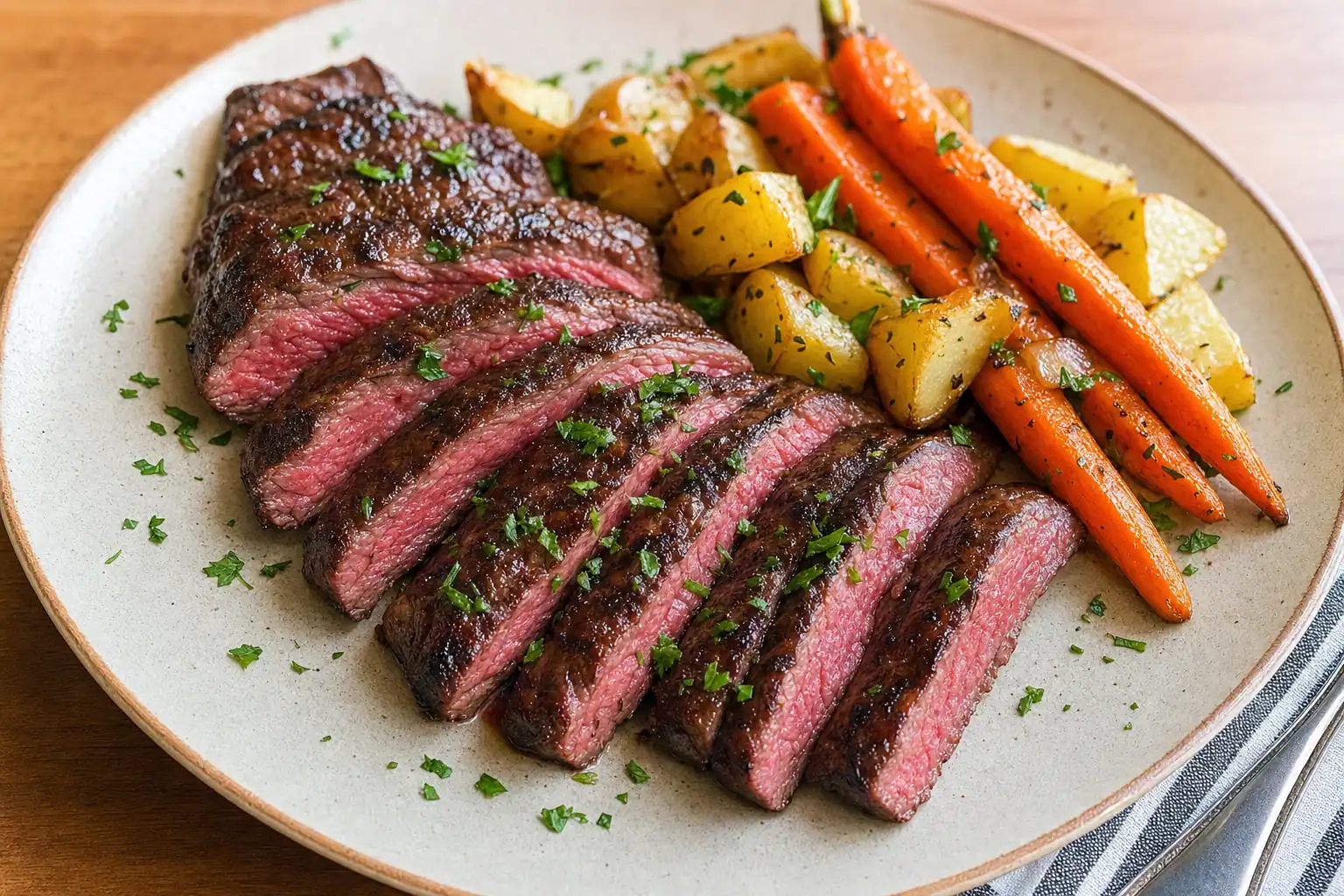
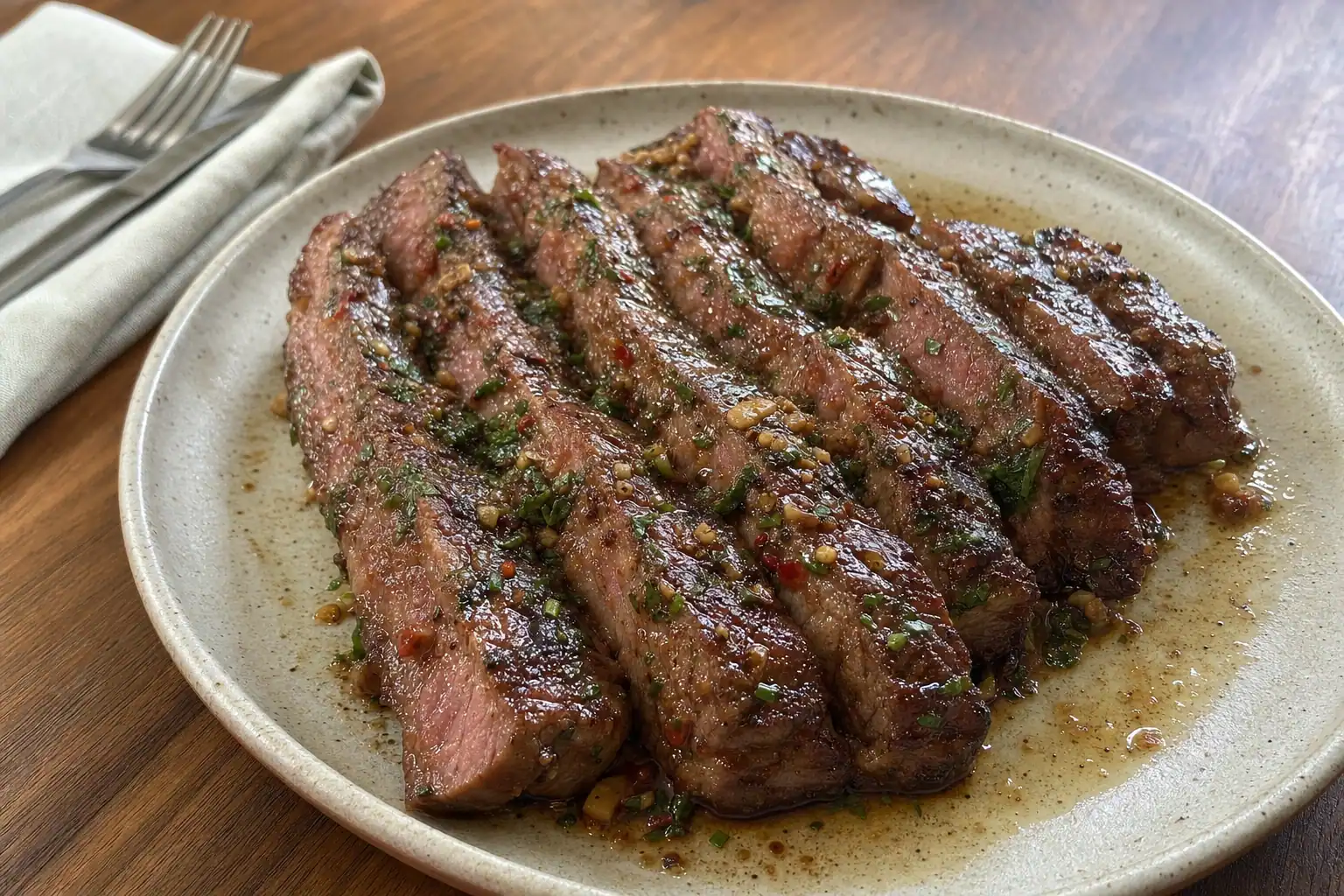
Pan-Seared Flat Iron Steak with Garlic Herb Butter
Flat iron steak is tender, beefy, and quick to cook. A hot pan, a short rest, and a simple garlic herb butter turn it into an easy dinner that feels special without much fuss.
Total
20 min
Servings
4 servings
Level
Easy
Flat iron steak comes from the shoulder of the cow, but it is much more tender than many other shoulder cuts. It has a rich flavor, cooks fast, and usually costs less than ribeye or strip steak.
The key is high heat and a little patience. Pat the steak very dry, season it well, then sear it in a heavy skillet until a brown crust forms. Letting the meat rest after cooking keeps the juices where they belong.
This recipe uses a quick garlic herb butter spooned over the steak at the end. Serve it with potatoes, salad, roasted vegetables, or sliced over rice bowls.
01What you'll need
Ingredients
10 items · 4 servings
- 1 1/2 pounds flat iron steak, about 1 inch thick
- 1 1/2 teaspoons kosher salt
- 3/4 teaspoon freshly ground black pepper
- 1 teaspoon garlic powder
- 1 tablespoon neutral oil, such as canola, avocado, or vegetable oil
- 2 tablespoons unsalted butter
- 2 garlic cloves, lightly smashed
- 2 sprigs fresh thyme or rosemary
- 1 teaspoon fresh lemon juice, optional
- Flaky salt, for serving, optional
02How to make it
Step-by-step
1. Dry and season the steak
Pat the flat iron steak very dry with paper towels. Sprinkle both sides with kosher salt, black pepper, and garlic powder. If you have time, let it sit at room temperature for 20 to 30 minutes so it cooks more evenly.
2. Heat the skillet
Place a large cast-iron or heavy stainless steel skillet over medium-high heat for 3 to 5 minutes. The pan should be hot enough that a drop of water sizzles right away. Turn on your vent fan if you have one.
3. Sear the first side
Add the oil to the hot skillet and swirl to coat the surface. Lay the steak in the pan away from you to avoid splatter. Cook without moving it for 3 to 4 minutes, until the underside is deeply browned.
4. Flip and cook the second side
Turn the steak over with tongs. Cook for 2 to 4 minutes more, depending on thickness and how done you like it. For medium-rare, look for about 130°F to 135°F on an instant-read thermometer. The USDA recommends cooking whole cuts of beef to 145°F followed by a 3-minute rest.
5. Add butter and herbs
Reduce the heat to medium-low. Add the butter, smashed garlic, and thyme or rosemary to the pan. When the butter melts and foams, tilt the pan slightly and spoon the butter over the steak for 30 to 60 seconds.
6. Rest the steak
Transfer the steak to a cutting board. Spoon a little of the pan butter over the top. Let it rest for 5 to 10 minutes. Resting means leaving the meat alone after cooking so the juices settle back into the steak.
7. Slice against the grain
Look for the direction of the muscle lines, also called the grain. Slice across those lines into thin strips. This makes each bite more tender. Add a squeeze of lemon juice and a pinch of flaky salt if you like.
8. Serve right away
Serve the sliced steak warm with the buttery pan juices. It pairs well with mashed potatoes, fries, green beans, salad, roasted carrots, or crusty bread.
03From our kitchen
Cook's tips
- Make-ahead: You can season the steak up to 24 hours ahead. Place it uncovered on a plate or rack in the refrigerator. This lightly dries the surface and helps it brown. Let it sit at room temperature for 20 to 30 minutes before cooking.
- Storage: Refrigerate leftover steak in an airtight container for up to 3 days. Reheat gently in a covered skillet over low heat, or slice it cold for salads and sandwiches.
- Freezing: Cooked flat iron steak can be frozen for up to 2 months, but it may lose some tenderness. Wrap it tightly and thaw overnight in the refrigerator.
- No cast-iron skillet: Use a heavy stainless steel pan. Avoid a thin nonstick pan for this recipe because it may not get hot enough for a good crust.
- Oil swap: Avocado, canola, vegetable, or grapeseed oil all work. Olive oil is fine if that is what you have, but avoid very high heat if it starts smoking heavily.
- Herb swap: Use rosemary, thyme, parsley, or a small pinch of dried Italian seasoning. If using dried herbs, add them with the butter and use less because dried herbs taste stronger than fresh ones.
Cook's note
Flat iron steak often has a visible grain that changes direction slightly. Take a moment before slicing to check the lines in the meat, then cut across them. This small step makes a big difference in tenderness.
04Frequently asked
Questions & answers
What is flat iron steak?
Flat iron steak is a cut from the shoulder, also called the chuck. It is known for being tender, flavorful, and fairly quick to cook. It is usually long and flat, which makes it good for pan-searing or grilling.
Do I need to marinate flat iron steak?
No, you do not need to marinate it. Flat iron steak is already tender. Salt, pepper, and a good sear are enough. If you want extra flavor, you can marinate it for 30 minutes to 4 hours, but avoid very acidic marinades for too long because they can make the surface mushy.
How do I know when flat iron steak is done?
Use an instant-read thermometer inserted into the thickest part. Medium-rare is about 130°F to 135°F, medium is about 140°F to 145°F, and medium-well is about 150°F to 155°F. The temperature will rise a little as the steak rests.
Why is my steak tough?
It may be overcooked, sliced with the grain, or not rested long enough. Flat iron steak is at its most tender when cooked to medium-rare or medium and sliced thinly against the grain.
Can I grill flat iron steak instead?
Yes. Heat the grill to medium-high and oil the grates. Grill the steak for about 3 to 5 minutes per side, depending on thickness. Rest it for 5 to 10 minutes, then slice against the grain.
05Keep cooking
You might also like
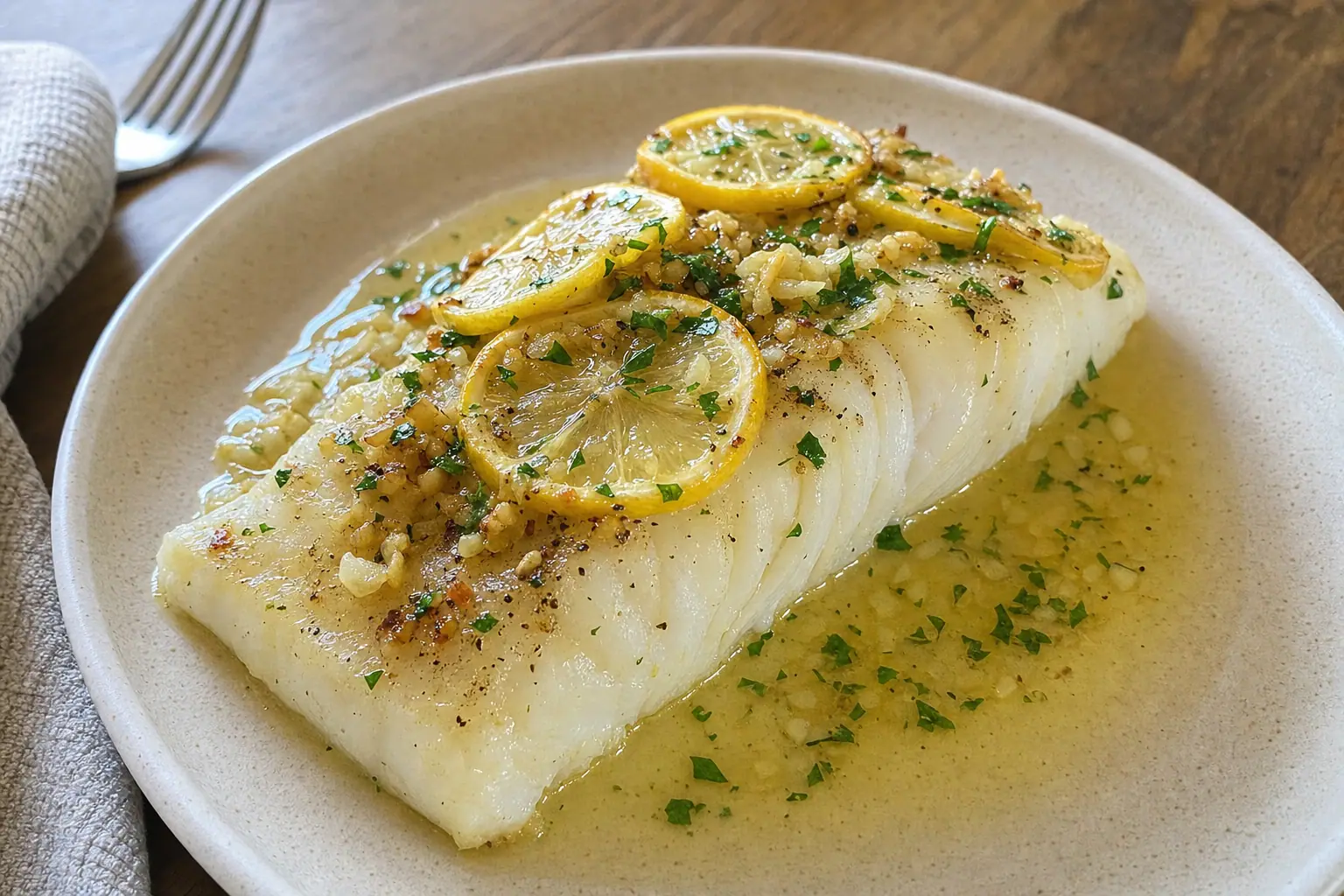 Dinner
Simple Baked Cod with Lemon and Garlic
This easy baked cod is tender, flaky, and bright with lemon, garlic, and a little butter. It is a quick weeknight dinner that feels fresh without asking much of the cook.
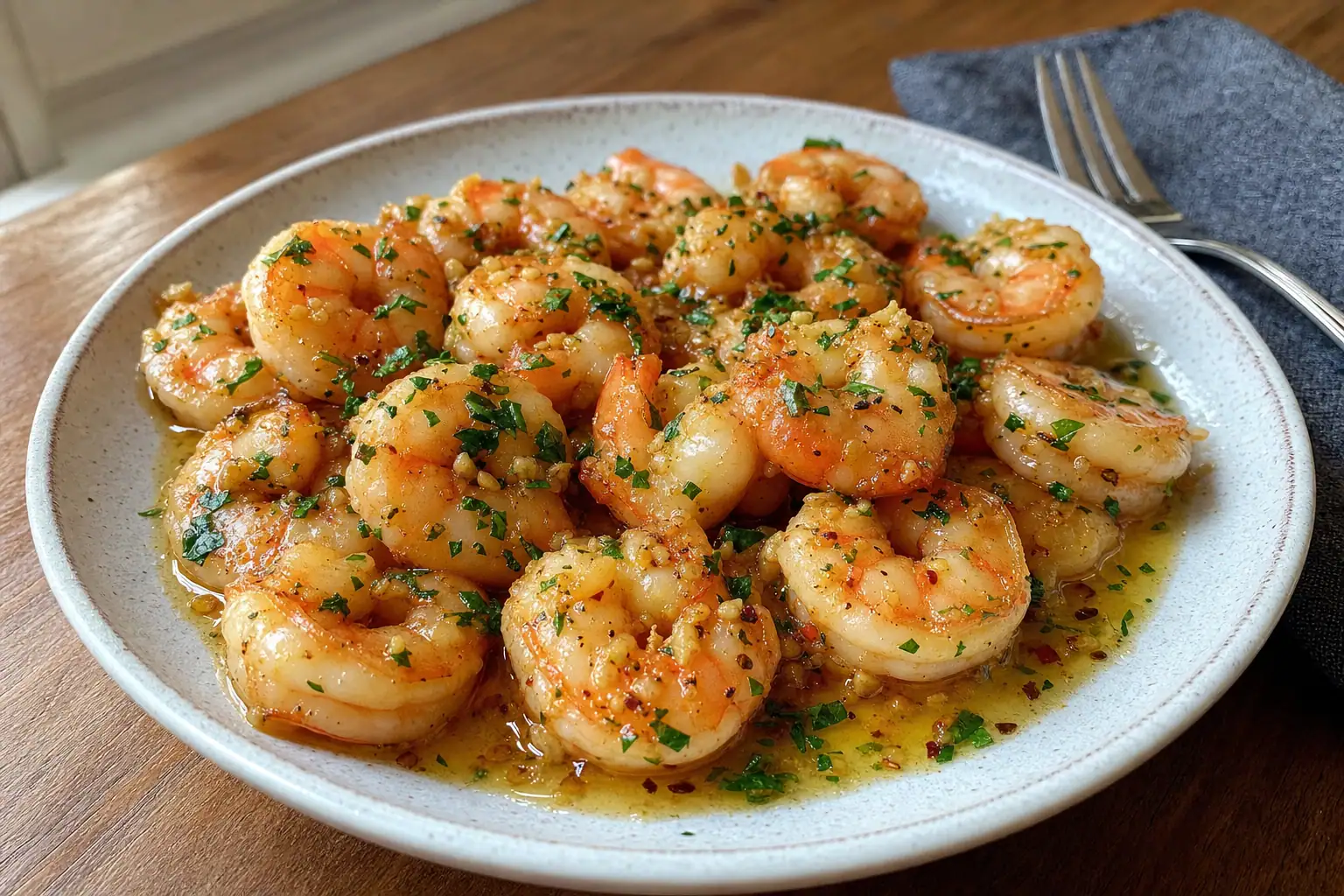 Dinner
Garlic Butter Shrimp
This quick skillet shrimp is bright with lemon, rich with butter, and ready in about 20 minutes. Serve it with rice, pasta, crusty bread, or a simple salad for an easy dinner.
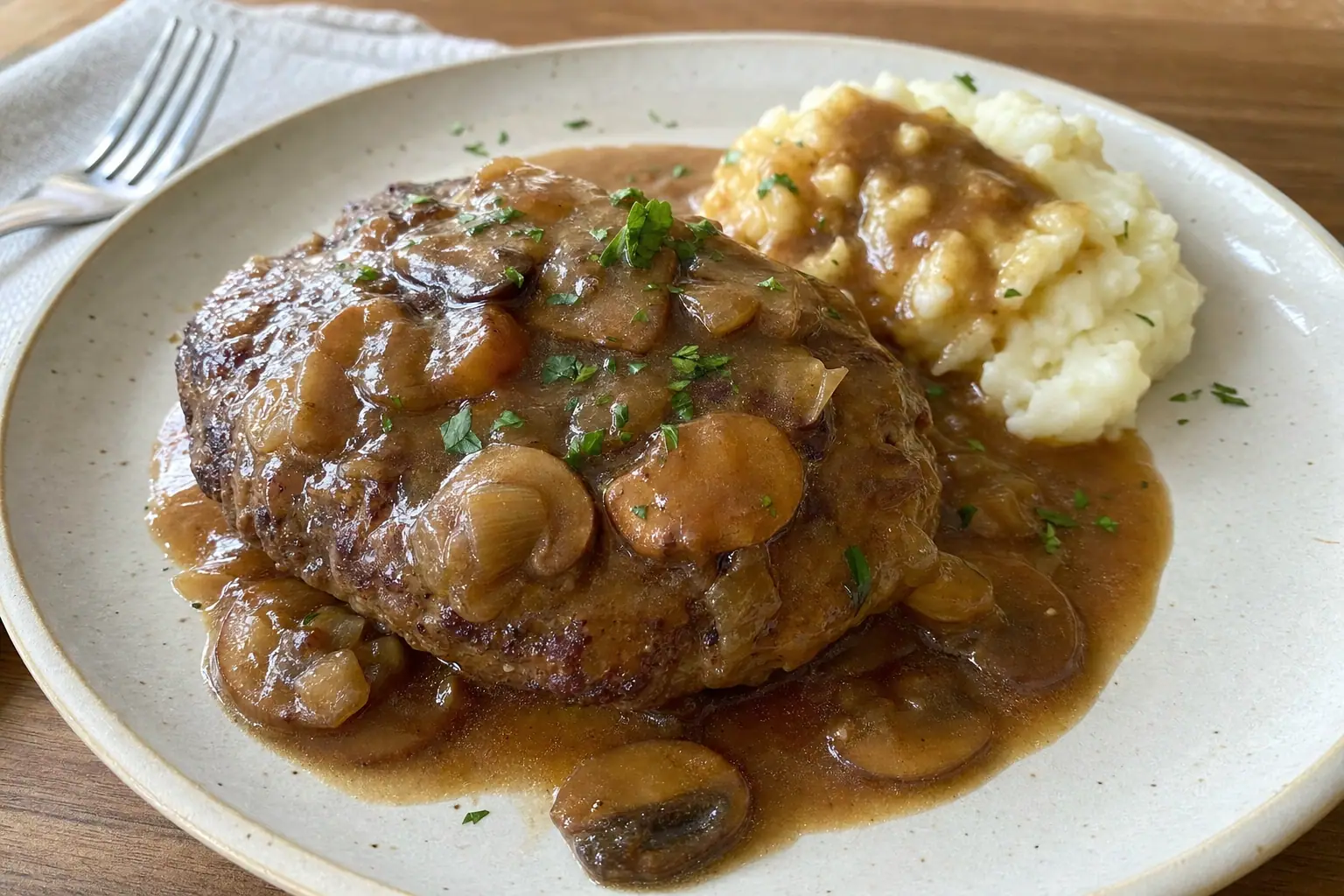 Dinner
Salisbury Steak with Mushroom Onion Gravy
This cozy Salisbury steak recipe turns simple ground beef into tender pan-seared patties with a rich mushroom onion gravy. It is a practical weeknight dinner that feels a little old-fashioned in the nicest way.
 Dinner
Simple Steak Marinade
This easy steak marinade uses soy sauce, garlic, Worcestershire sauce, and a little lemon to season steak without covering up its flavor. It is quick to whisk together and works for grilling, pan-searing, or broiling.