
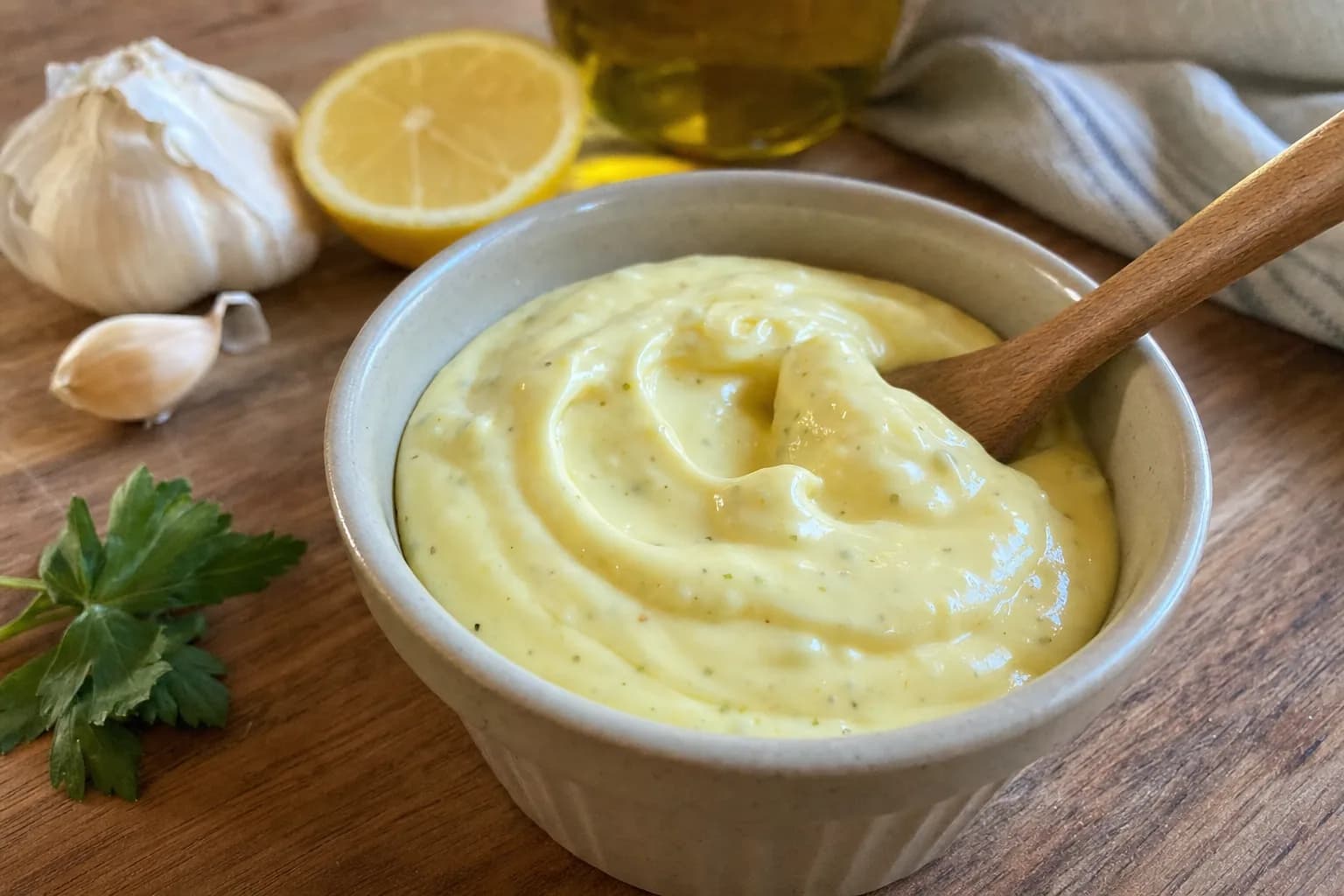
Garlic Aioli
Creamy garlic aioli is a simple sauce for fries, sandwiches, roasted vegetables, seafood, and grain bowls. This version uses an egg yolk, lemon, and a slow stream of oil to make a thick, glossy emulsion at home.
Total
15 min
Servings
Makes about 1 cup
Level
Medium
Garlic aioli is a rich, punchy sauce with roots around the Mediterranean, especially in Provençal and Catalan cooking. At its simplest, it is garlic and oil blended into a creamy sauce. Many home versions, including this one, use egg yolk to help the sauce thicken and hold together.
The key word here is emulsion. That means two ingredients that do not usually mix, like oil and water-based lemon juice, are whisked together until they become smooth and stable. Add the oil slowly at first and the aioli will reward you with a silky texture.
Serve it as a dip for potatoes, spread it on burgers or sandwiches, or spoon it next to grilled fish and vegetables. A little goes a long way, so one small batch can carry several meals.
01What you'll need
Ingredients
9 items · Makes about 1 cup
- 2 medium garlic cloves, peeled
- 1/4 teaspoon fine salt, plus more to taste
- 1 large pasteurized egg yolk, at room temperature
- 1 teaspoon fresh lemon juice, plus more to taste
- 1 teaspoon Dijon mustard
- 3/4 cup neutral oil, such as sunflower, grapeseed, or canola
- 1/4 cup extra-virgin olive oil
- 1 to 2 teaspoons cold water, if needed
- Freshly ground black pepper, optional
02How to make it
Step-by-step
1. Mash the garlic
Finely grate or mince the garlic. Sprinkle it with the salt, then use the flat side of a knife to mash it into a rough paste. This helps the garlic blend evenly into the sauce instead of leaving sharp little pieces.
2. Set up the bowl
Place a medium bowl on a damp kitchen towel so it does not slide while you whisk. Add the garlic paste, egg yolk, lemon juice, and Dijon mustard to the bowl.
3. Whisk the base
Whisk the yolk mixture for about 30 seconds, until it looks smooth and slightly lighter in color. This gives the sauce a strong starting point before the oil goes in.
4. Add the oil drop by drop
Whisk constantly while adding the neutral oil a few drops at a time. Go slowly for the first 2 to 3 tablespoons. The mixture should begin to thicken and look creamy.
5. Stream in the remaining neutral oil
Once the aioli has thickened, pour in the rest of the neutral oil in a very thin, steady stream while whisking. If the bowl slides or your arm gets tired, pause pouring but keep the sauce steady.
6. Whisk in the olive oil
Slowly whisk in the extra-virgin olive oil. Adding it at the end keeps its flavor fresh without making the sauce taste too bitter.
7. Adjust the texture
If the aioli is thicker than you like, whisk in 1 teaspoon cold water. Add a second teaspoon if needed. The sauce should be creamy and spoonable, not stiff like butter.
8. Taste and rest
Taste and add more salt, lemon juice, or black pepper if you like. Let the aioli rest in the refrigerator for 20 to 30 minutes before serving so the garlic flavor can settle.
03From our kitchen
Cook's tips
- Make-ahead: Garlic aioli can be made a few hours before serving. In fact, a short rest in the fridge makes the flavor rounder.
- Storage: Keep aioli in a clean, covered container in the refrigerator and use within 3 days. Because it contains raw egg yolk, do not leave it at room temperature for more than 2 hours.
- Egg safety: Use a pasteurized egg yolk if you can. People who are pregnant, very young, elderly, or immunocompromised should avoid sauces made with raw unpasteurized egg.
- Milder garlic: For a softer flavor, use 1 garlic clove instead of 2, or soak minced garlic in the lemon juice for 10 minutes before mixing.
- Oil swaps: Use mostly neutral oil for the smoothest taste. All olive oil can turn bitter, especially if blended too aggressively.
- Shortcut version: Stir 1 finely grated garlic clove and 1 to 2 teaspoons lemon juice into 1 cup good mayonnaise. It is not the same as homemade aioli, but it is quick and reliable.
Cook's note
If the aioli breaks, meaning it looks oily or curdled, do not throw it away. Put 1 teaspoon water or lemon juice in a clean bowl, then slowly whisk the broken aioli into it a spoonful at a time until it comes back together.
04Frequently asked
Questions & answers
Can I make garlic aioli without raw egg?
Yes. For an egg-free shortcut, mix garlic, lemon juice, and a little salt into store-bought mayonnaise, or use vegan mayonnaise. The flavor will be slightly different, but it works well as a dip or spread.
Why did my aioli split?
Aioli usually splits when the oil is added too quickly, especially at the beginning. Start with drops of oil, whisk constantly, and only pour faster once the mixture has thickened.
Can I use a blender or immersion blender?
Yes. An immersion blender is the easiest tool. Put the egg yolk, garlic, lemon, mustard, and oils in a narrow cup, then blend from the bottom and slowly lift the blender as the sauce thickens. Use light olive oil or mostly neutral oil to reduce bitterness.
How long does homemade garlic aioli last?
Store it covered in the refrigerator for up to 3 days. Use a clean spoon each time so it stays fresh.
What should I serve with garlic aioli?
Serve it with fries, roasted potatoes, steamed artichokes, grilled shrimp, fish, chicken, roasted carrots, sandwiches, or burgers.
05Keep cooking
You might also like
 Salads & sides
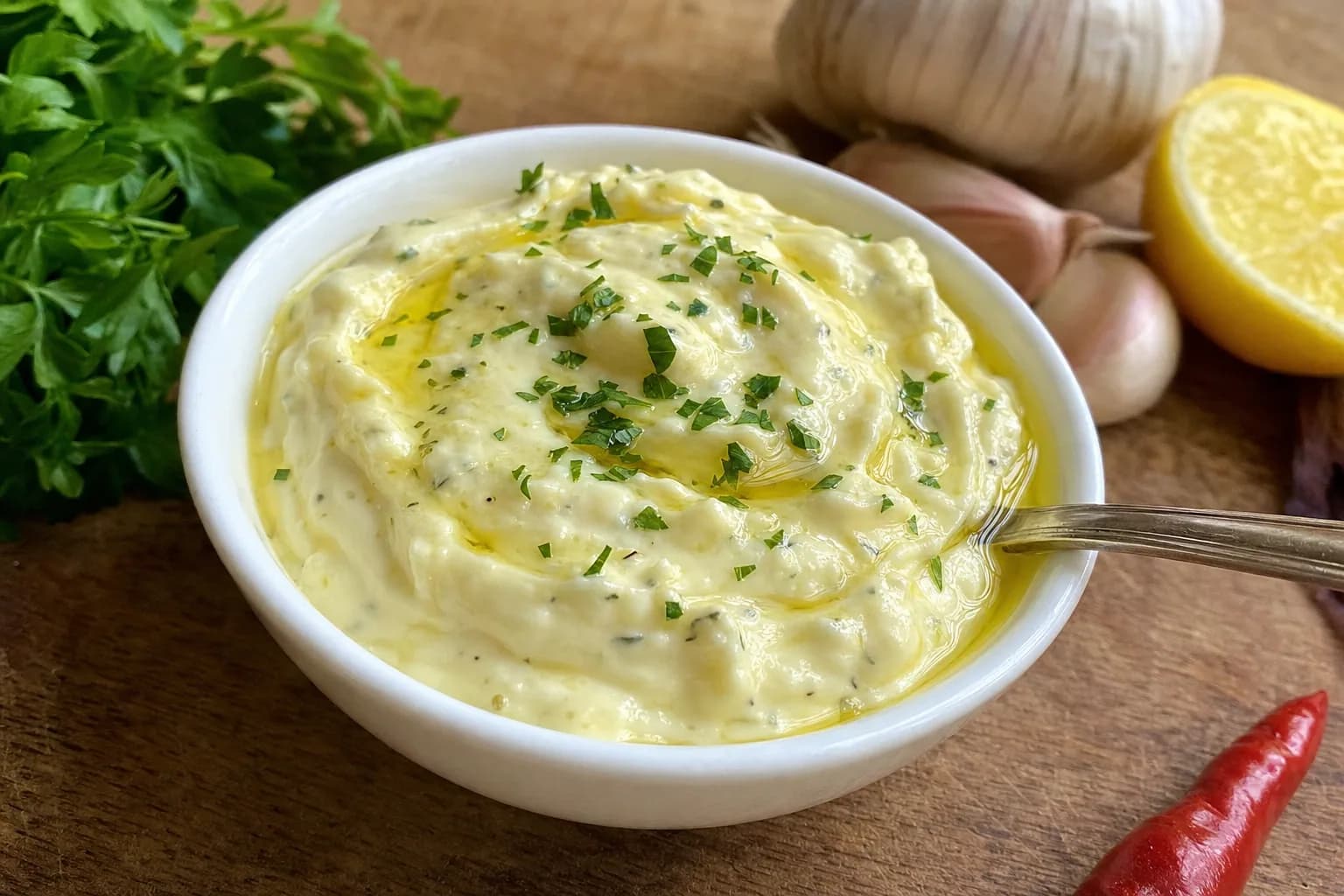
Garlic Aioli
Creamy, garlicky aioli is a simple sauce that makes fries, sandwiches, grilled vegetables, and seafood feel more complete. This version uses an egg yolk and a slow stream of oil for a smooth, spoonable texture.
 Salads & sides
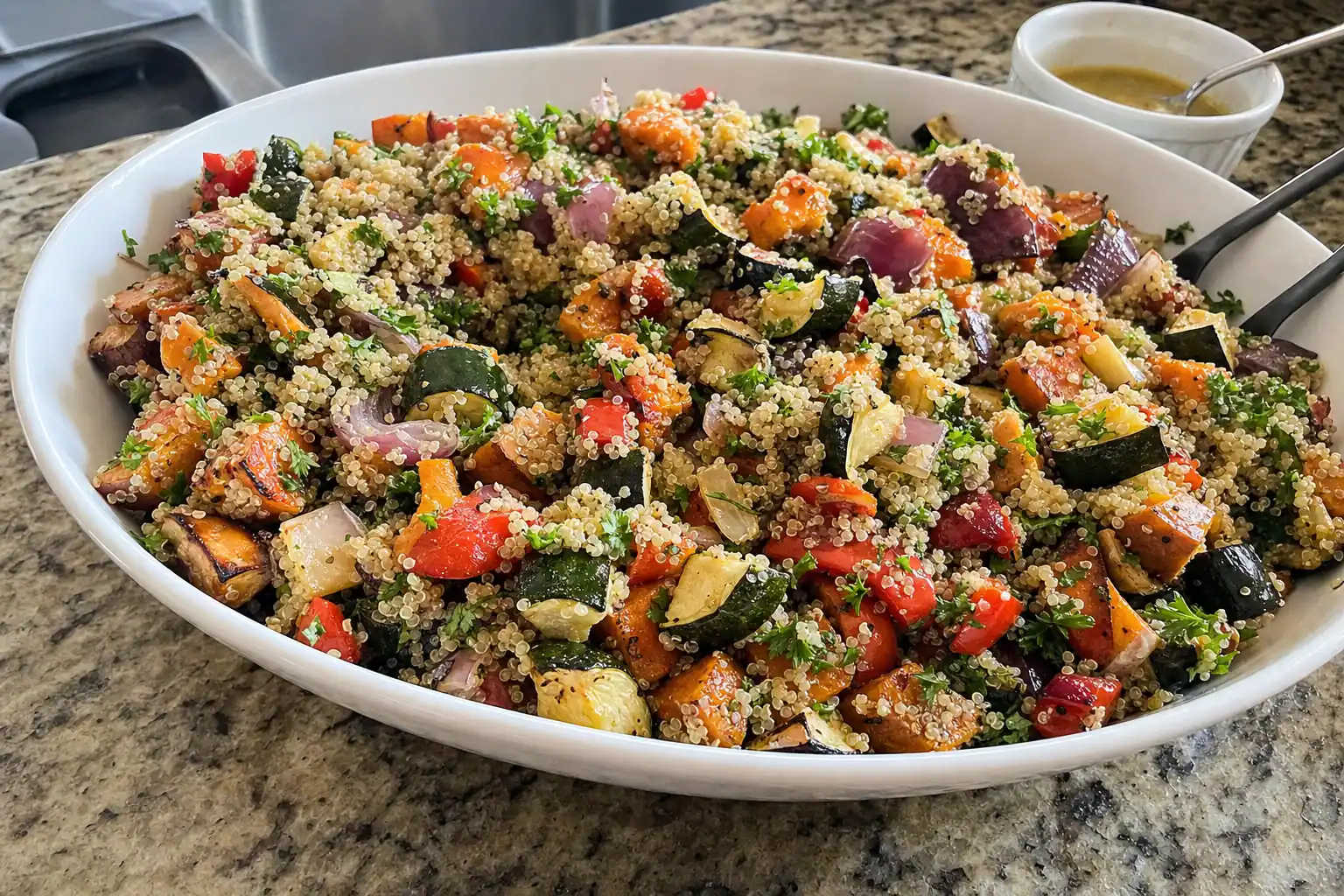
Quinoa and Roasted Vegetable Salad
A hearty and healthy salad that’s perfect for lunch or a light dinner.
 Salads & sides
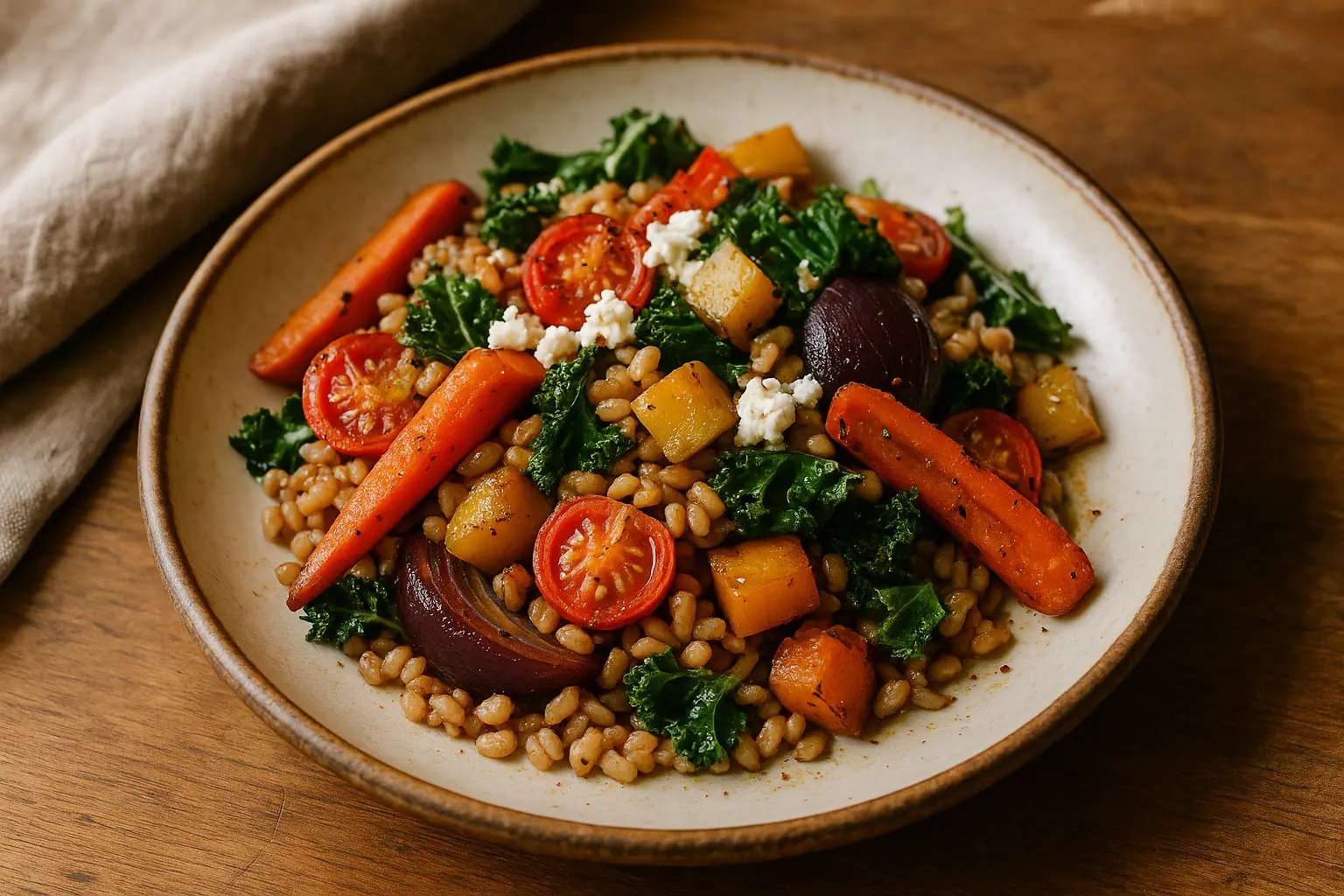
Hearty Farro Salad with Roasted Vegetables
A warm and satisfying farro salad perfect for any season.
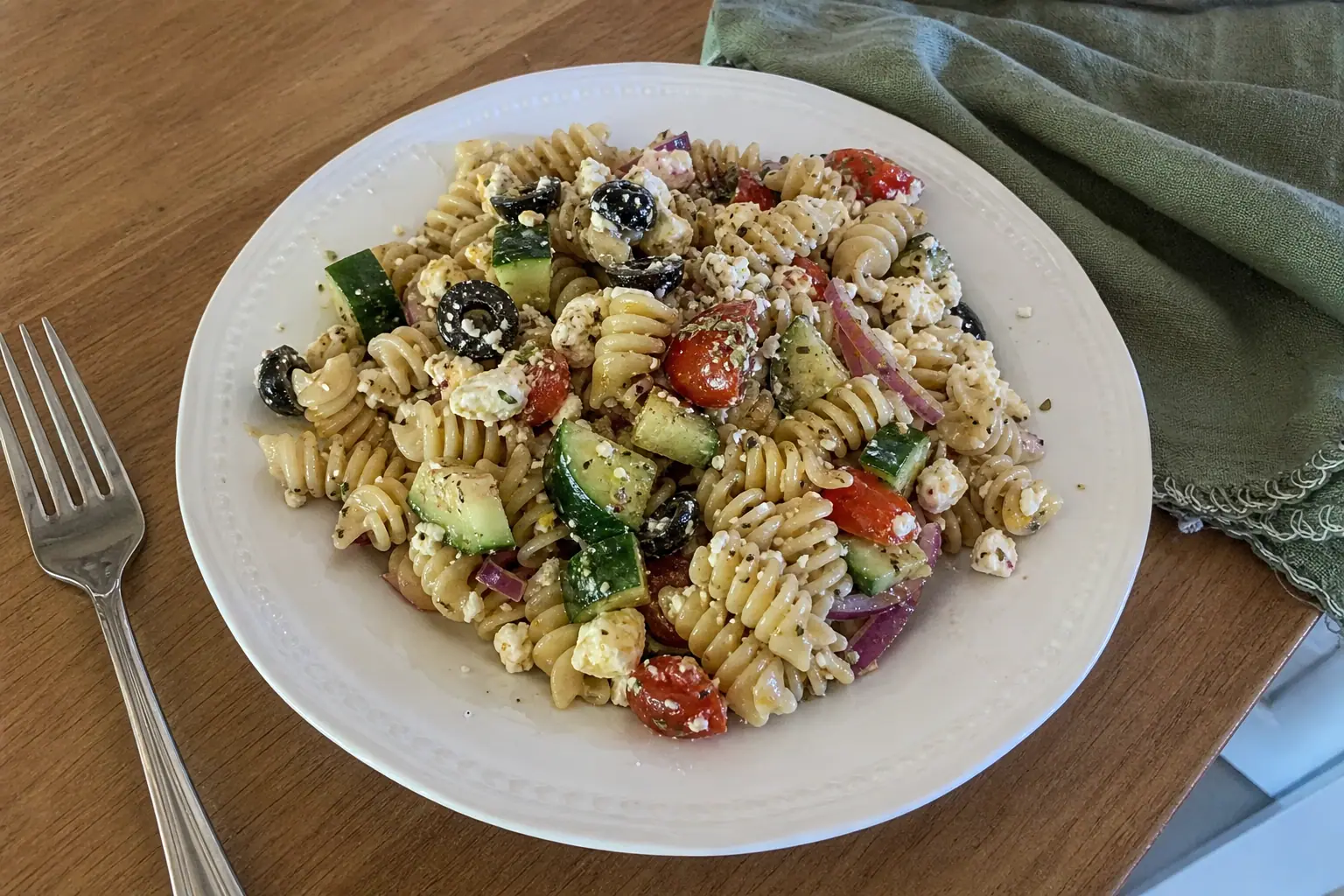 Salads & sides
Mediterranean Pasta Salad
This vibrant pasta salad is a great way to bring Mediterranean flavors to your table.