
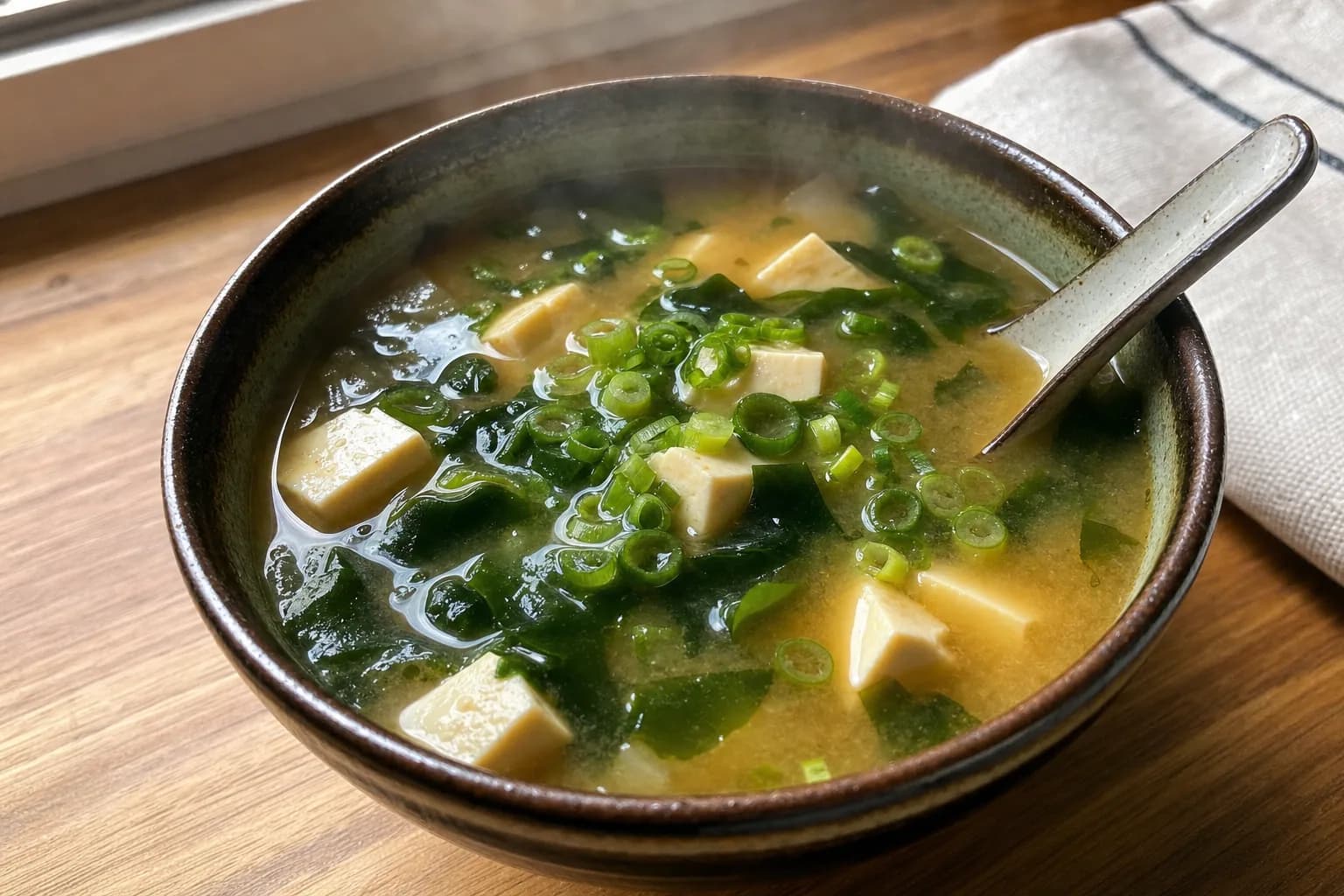
Miso Soup
This gentle Japanese soup is built on savory dashi, soft tofu, seaweed, and miso paste. It is quick enough for a weekday lunch and comforting enough to serve with rice, noodles, or grilled fish.
Total
25 min
Servings
4 servings
Level
Easy
Miso soup is a simple, everyday soup in Japanese cooking. The flavor starts with dashi, a light broth usually made from kombu, which is dried kelp, and bonito flakes, which are thin shavings of dried fish.
Miso paste brings the deep, salty flavor. It is made from fermented soybeans, and it should be stirred in gently at the end so the soup stays smooth and fragrant.
This version uses tofu, wakame seaweed, and scallions. It is a classic mix, but miso soup is flexible, so you can add mushrooms, greens, or cooked vegetables depending on what you have.
01What you'll need
Ingredients
8 items · 4 servings
- 4 cups water
- 1 piece kombu, about 4 inches long
- 1 cup loosely packed bonito flakes, also called katsuobushi
- 2 tablespoons dried wakame seaweed
- 6 ounces soft or medium tofu, cut into small cubes
- 3 tablespoons white miso paste, plus more to taste
- 2 scallions, thinly sliced
- Optional: 1 teaspoon soy sauce, if you want a saltier broth
02How to make it
Step-by-step
1. Soften the wakame
Place the dried wakame in a small bowl and cover it with cool water. Let it sit for 5 minutes, or until it expands and softens. Drain well and set aside.
2. Warm the kombu
Add the 4 cups water and kombu to a medium saucepan. Warm over medium heat until small bubbles appear around the edges. Do not let it boil, as boiling kombu can make the broth taste bitter or slippery.
3. Add the bonito flakes
Remove the kombu from the pan. Add the bonito flakes, turn off the heat, and let them steep for 5 minutes. Steep means to let an ingredient sit in hot liquid so it gives flavor to the liquid.
4. Strain the dashi
Pour the broth through a fine-mesh strainer into a clean saucepan or large heatproof bowl. Discard the bonito flakes, or save them for another use. You should have about 3 1/2 to 4 cups dashi.
5. Heat the tofu and seaweed
Return the strained dashi to the saucepan. Add the tofu and drained wakame. Warm over medium-low heat for 2 to 3 minutes, just until the tofu is heated through.
6. Dissolve the miso
Scoop about 1/2 cup hot broth into a small bowl. Add the miso paste and whisk or stir until smooth. This helps prevent lumps in the soup.
7. Stir in the miso
Lower the heat to very low, then stir the loosened miso mixture back into the pot. Taste and add a little more miso if you want a stronger flavor. Do not boil the soup after adding miso.
8. Serve right away
Ladle the soup into bowls and top with sliced scallions. Serve warm, with rice or a simple meal.
03From our kitchen
Cook's tips
- Make-ahead: You can make the dashi up to 3 days ahead. Cool it, cover it, and refrigerate it. Add tofu, wakame, and miso only when you are ready to serve.
- Storage: Leftover miso soup keeps in the fridge for up to 2 days. Reheat gently over low heat and do not boil it, or the miso can lose some of its aroma and the tofu may become tough.
- Vegetarian swap: Skip the bonito flakes and use a larger piece of kombu plus 3 or 4 dried shiitake mushrooms. Soak them in the water for at least 30 minutes, then warm and strain. This makes a plant-based dashi.
- Miso choice: White miso is mild and slightly sweet. Yellow miso is a little stronger. Red miso is deeper and saltier, so start with less and add more to taste.
- No fine-mesh strainer: Line a regular strainer with a coffee filter or a clean piece of cheesecloth to catch the bonito flakes.
- Add-ins: Try sliced mushrooms, baby spinach, cooked sweet potato, daikon, or clams. Add firm vegetables earlier so they have time to soften; add tender greens at the end.
Cook's note
Miso varies a lot by brand and type, so taste before adding extra salt or soy sauce. If the soup tastes flat, it may need a little more miso. If it tastes too salty, add a splash of hot water or unsalted dashi.
04Frequently asked
Questions & answers
Can I make miso soup without dashi?
Yes, but the flavor will be simpler. Use vegetable broth or water in a pinch, then add miso to taste. For a more traditional flavor without fish, make kombu and dried shiitake dashi.
Why should I not boil miso soup?
Boiling can dull the fresh aroma of miso and may make the soup look grainy. Keep the soup at a gentle heat after the miso goes in.
What kind of tofu should I use?
Soft tofu gives a delicate texture, while medium tofu holds its shape a little better. Firm tofu also works, but it will feel less silky in the soup.
Can I use instant dashi powder?
Yes. Follow the package directions to make 4 cups dashi, then continue with the tofu, wakame, and miso. Taste before adding soy sauce, because instant dashi can be salty.
Is miso soup gluten-free?
It can be, but check the miso label. Some miso is made with barley or other grains that contain gluten. Use gluten-free miso and gluten-free soy sauce or tamari if needed.
05Keep cooking
You might also like
 Lunch & light meals
Cozy Broccoli Cheddar Soup
Warm up with this creamy and cheesy broccoli cheddar soup, perfect for a chilly day!
 Lunch & light meals
Egg Drop Soup
This simple egg drop soup turns broth, eggs, and a few pantry seasonings into a warm bowl in about 20 minutes. The key is pouring beaten eggs slowly into hot broth so they set into soft, silky ribbons.
 Lunch & light meals
Stracciatella Soup
This Roman-style egg drop soup turns a few kitchen staples into a light, comforting meal. Hot broth, beaten eggs, Parmesan, and a little spinach come together in minutes.
 Lunch & light meals
Broccoli Cheese Soup
This creamy broccoli cheese soup is cozy, simple, and made with everyday ingredients. Sharp cheddar gives it a full, savory flavor, while a quick blend keeps the texture smooth but still hearty.