
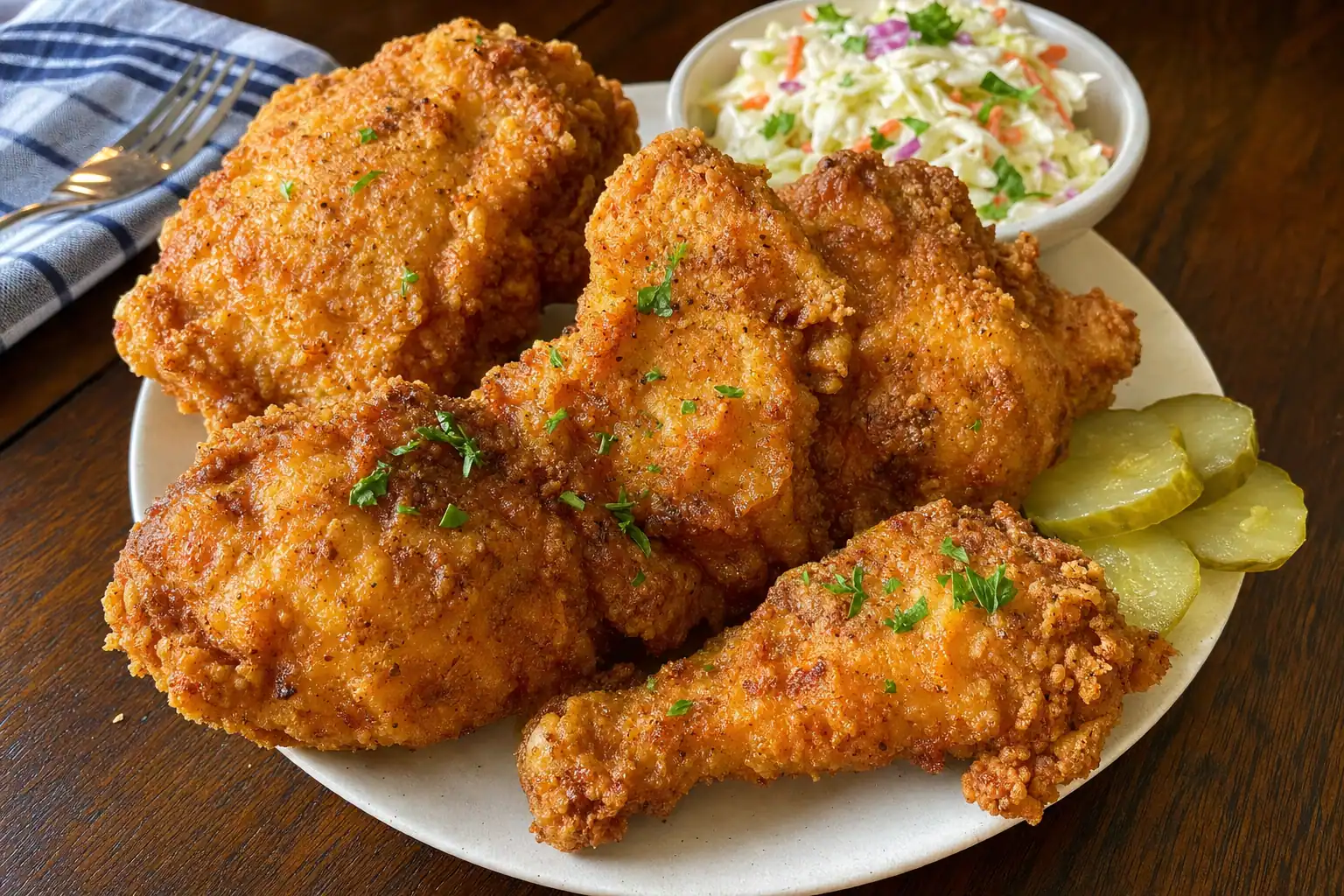
Buttermilk Fried Chicken
A tangy buttermilk soak makes this fried chicken juicy, while a seasoned flour coating fries up craggy and crisp. It is a weekend-style recipe, but each step is simple and manageable at home.
Total
55 min
Servings
4 to 6 servings
Level
Medium
Buttermilk fried chicken is all about planning ahead. The chicken rests in a tangy buttermilk marinade for at least 4 hours, which helps season the meat and keeps it tender once it hits the hot oil.
The coating is a simple mix of flour, cornstarch, and spices. A spoonful of the buttermilk marinade stirred into the flour creates small clumps that become extra-crisp bits when fried.
You do not need a deep fryer for this recipe. A heavy pot, a thermometer, and a little patience with oil temperature will get you there.
01What you'll need
Ingredients
13 items · 4 to 6 servings
- 3 1/2 to 4 pounds bone-in, skin-on chicken pieces, such as drumsticks, thighs, and breasts
- 2 cups buttermilk
- 2 teaspoons kosher salt, plus more for finishing
- 1 tablespoon hot sauce, optional
- 2 teaspoons garlic powder, divided
- 2 teaspoons onion powder, divided
- 2 teaspoons sweet paprika, divided
- 1 teaspoon freshly ground black pepper, divided
- 1/2 teaspoon cayenne pepper, optional
- 2 cups all-purpose flour
- 1/2 cup cornstarch
- 1 teaspoon baking powder
- Neutral oil for frying, such as vegetable, canola, or peanut oil, about 6 to 8 cups
02How to make it
Step-by-step
1. Marinate the chicken
Place the chicken in a large bowl or zip-top bag. Add the buttermilk, kosher salt, hot sauce if using, 1 teaspoon garlic powder, 1 teaspoon onion powder, 1 teaspoon paprika, 1/2 teaspoon black pepper, and cayenne if using. Turn the chicken to coat. Cover and refrigerate for at least 4 hours, or up to 24 hours.
2. Mix the seasoned flour
In a wide shallow bowl, whisk together the flour, cornstarch, baking powder, remaining 1 teaspoon garlic powder, remaining 1 teaspoon onion powder, remaining 1 teaspoon paprika, and remaining 1/2 teaspoon black pepper. Cornstarch helps make the crust lighter and crispier.
3. Add craggy bits
Spoon 3 tablespoons of the buttermilk marinade into the flour mixture. Rub it in with your fingers or a fork until small clumps form. These clumps fry into crunchy, bumpy pieces on the chicken.
4. Dredge the chicken
Remove one piece of chicken from the marinade and let the excess drip off. Place it in the flour mixture and press firmly so the coating sticks to every side. Transfer to a wire rack set over a baking sheet. Repeat with the remaining chicken.
5. Rest the coated chicken
Let the coated chicken sit at room temperature for 20 to 30 minutes while you heat the oil. This short rest helps the flour absorb moisture and reduces the chance of the crust falling off in the pot.
6. Heat the oil
Pour oil into a large Dutch oven or heavy pot to a depth of about 2 inches. Heat over medium to medium-high heat to 350°F. Use a deep-fry or candy thermometer if you have one. If the oil is too cool, the chicken will taste greasy; if it is too hot, the crust may darken before the inside cooks.
7. Fry in batches
Carefully lower a few pieces of chicken into the oil, skin side down, without crowding the pot. Fry, turning every few minutes, until deep golden brown and cooked through, about 12 to 15 minutes for drumsticks and thighs, and 15 to 18 minutes for large breasts. Adjust the heat to keep the oil around 325°F to 350°F as the chicken cooks.
8. Check for doneness
Transfer the fried chicken to a clean wire rack set over a baking sheet. Check the thickest part with an instant-read thermometer. Chicken is safe to eat at 165°F. If a piece browns too quickly but is not done inside, place it on the rack in a 325°F oven until it reaches 165°F.
9. Season and rest
Sprinkle the hot chicken lightly with salt. Let it rest for 5 to 10 minutes before serving. This helps the juices settle and gives the crust a chance to firm up.
03From our kitchen
Cook's tips
- Make-ahead: Marinate the chicken up to 24 hours ahead. You can also mix the dry flour coating a day ahead and keep it covered at room temperature.
- Do not skip the rest after dredging. Even 20 minutes helps the coating stick better during frying.
- Storage: Refrigerate leftover fried chicken in an airtight container for up to 3 days. The crust will soften in the fridge, but it can be crisped again.
- Reheating: Warm leftovers on a wire rack in a 375°F oven or air fryer until hot, about 10 to 15 minutes. Avoid the microwave if you want the crust to stay crisp.
- Buttermilk swap: If you do not have buttermilk, stir 2 tablespoons lemon juice or white vinegar into 2 cups whole milk. Let it stand for 10 minutes before using.
- Chicken swaps: Bone-in thighs and drumsticks are the easiest pieces to fry evenly. If using boneless chicken, reduce the cooking time and check the temperature early to avoid drying it out.
Cook's note
Frying is easiest when you work in small batches and watch the oil temperature. Keep children and pets away from the stove, lower chicken into the oil gently, and never leave hot oil unattended. Let used oil cool completely before straining and discarding or saving it according to your local guidelines.
04Frequently asked
Questions & answers
How long should chicken soak in buttermilk?
Aim for at least 4 hours. Overnight is even better for flavor and tenderness. Try not to go much longer than 24 hours, because the texture of the chicken can become too soft.
Why did my coating fall off?
The chicken may have been too wet, the coating may not have rested long enough, or the pot may have been crowded. Let excess marinade drip off, press the flour on firmly, rest the coated chicken, and fry in batches.
Can I make buttermilk fried chicken without a thermometer?
Yes, but a thermometer makes it much easier. Without one, drop a small pinch of flour into the oil. It should sizzle right away but not burn quickly. Still, use an instant-read thermometer for the chicken itself if possible, because it needs to reach 165°F.
Can I bake this instead of frying?
This exact coating is designed for frying, so baking will not give the same crust. For a baked version, drizzle the coated chicken with oil and bake on a rack at 425°F until it reaches 165°F, but expect a drier, less craggy crust.
What oil is good for frying chicken?
Use a neutral oil with a high smoke point, such as vegetable, canola, or peanut oil. Olive oil is not a good choice here because it has a stronger flavor and can smoke at frying temperatures.
05Keep cooking
You might also like
 Dinner
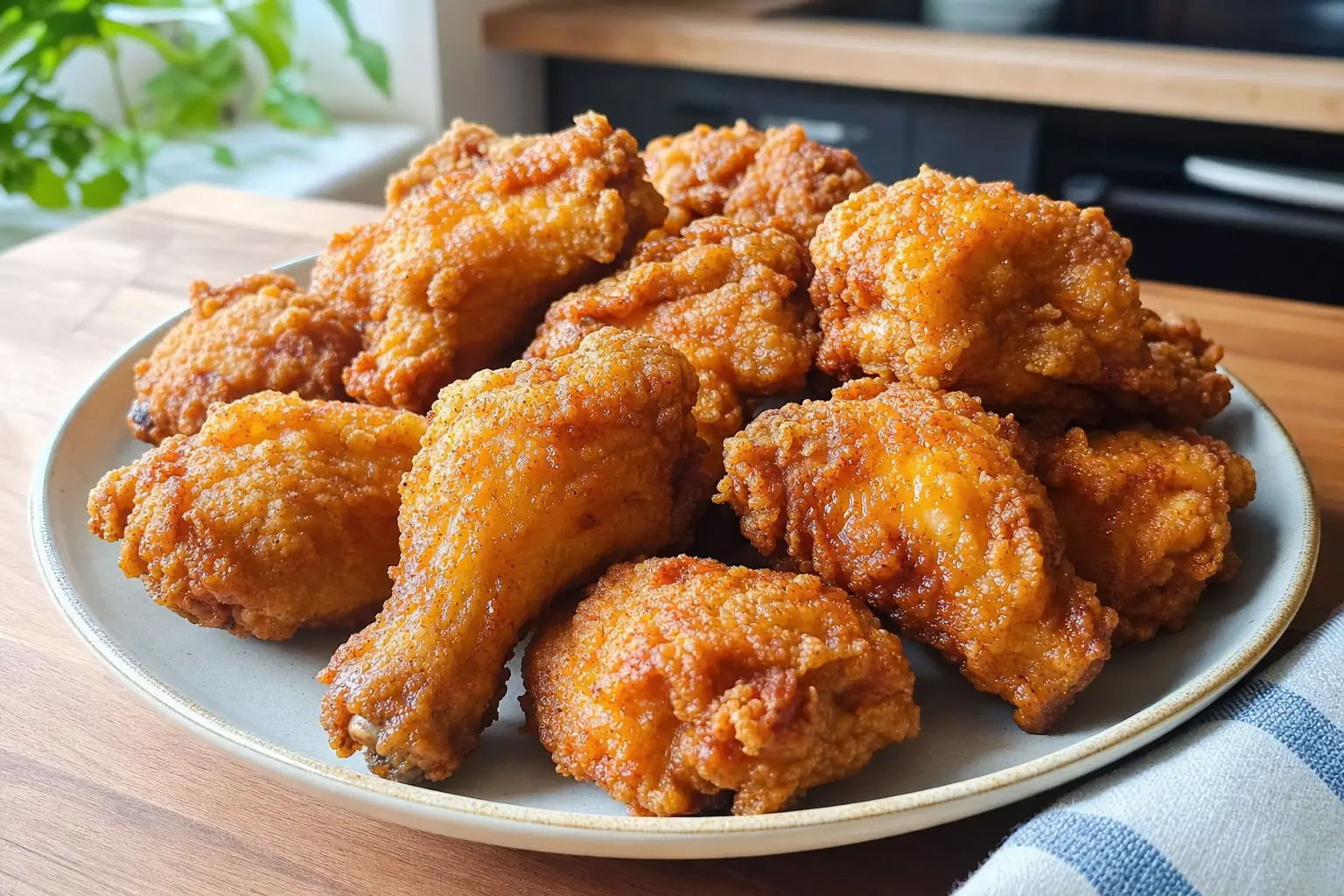
Crispy Fried Chicken
This classic fried chicken is soaked in seasoned buttermilk, coated in a peppery flour mix, and fried until crisp outside and juicy inside. It takes a little planning, but the steps are simple and very doable at home.
 Dinner
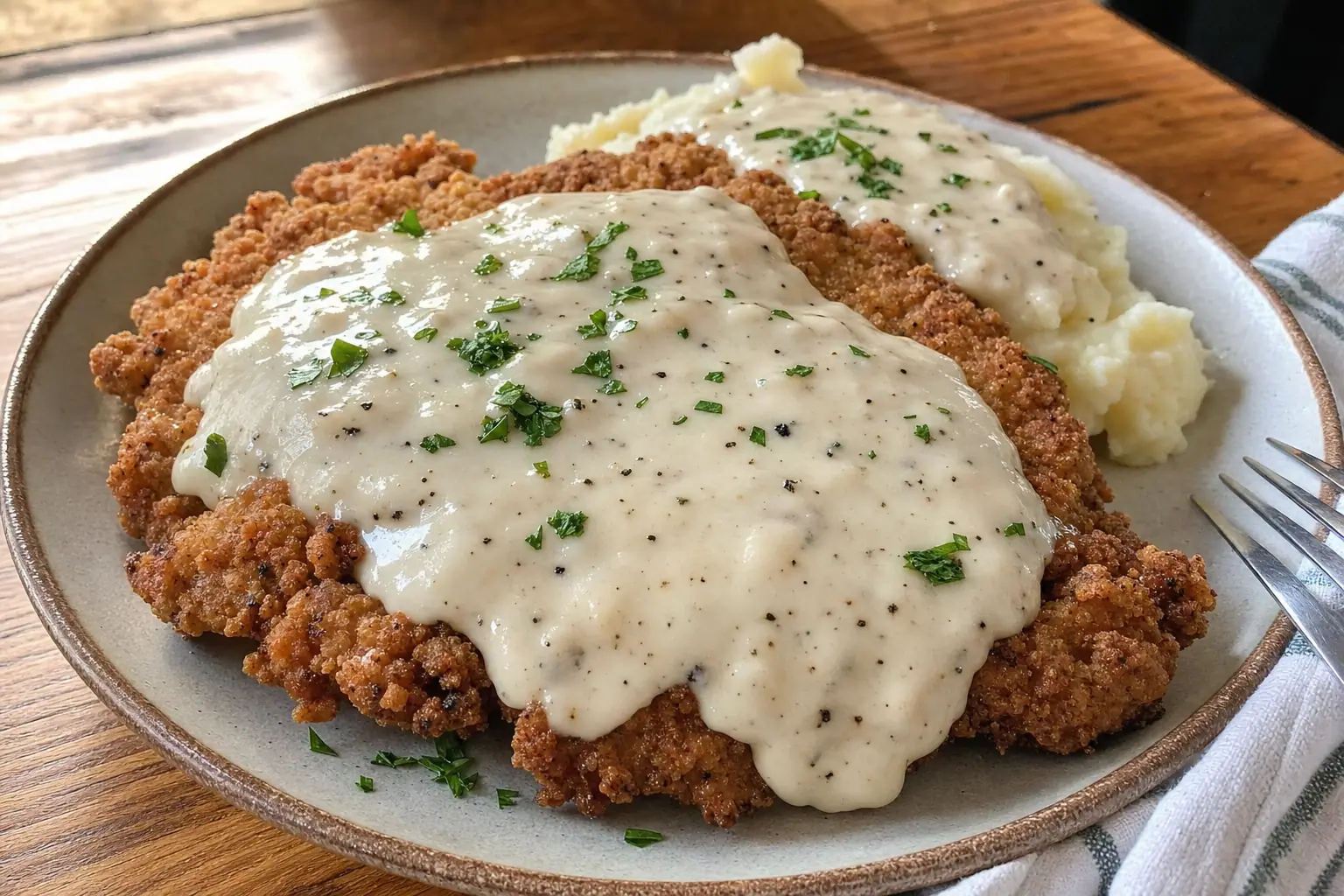
Country Fried Steak
Tender cube steaks get a seasoned flour crust, a quick pan-fry, and a blanket of creamy pepper gravy. This is a cozy Southern-style dinner that feels special but uses simple grocery-store ingredients.
 Dinner
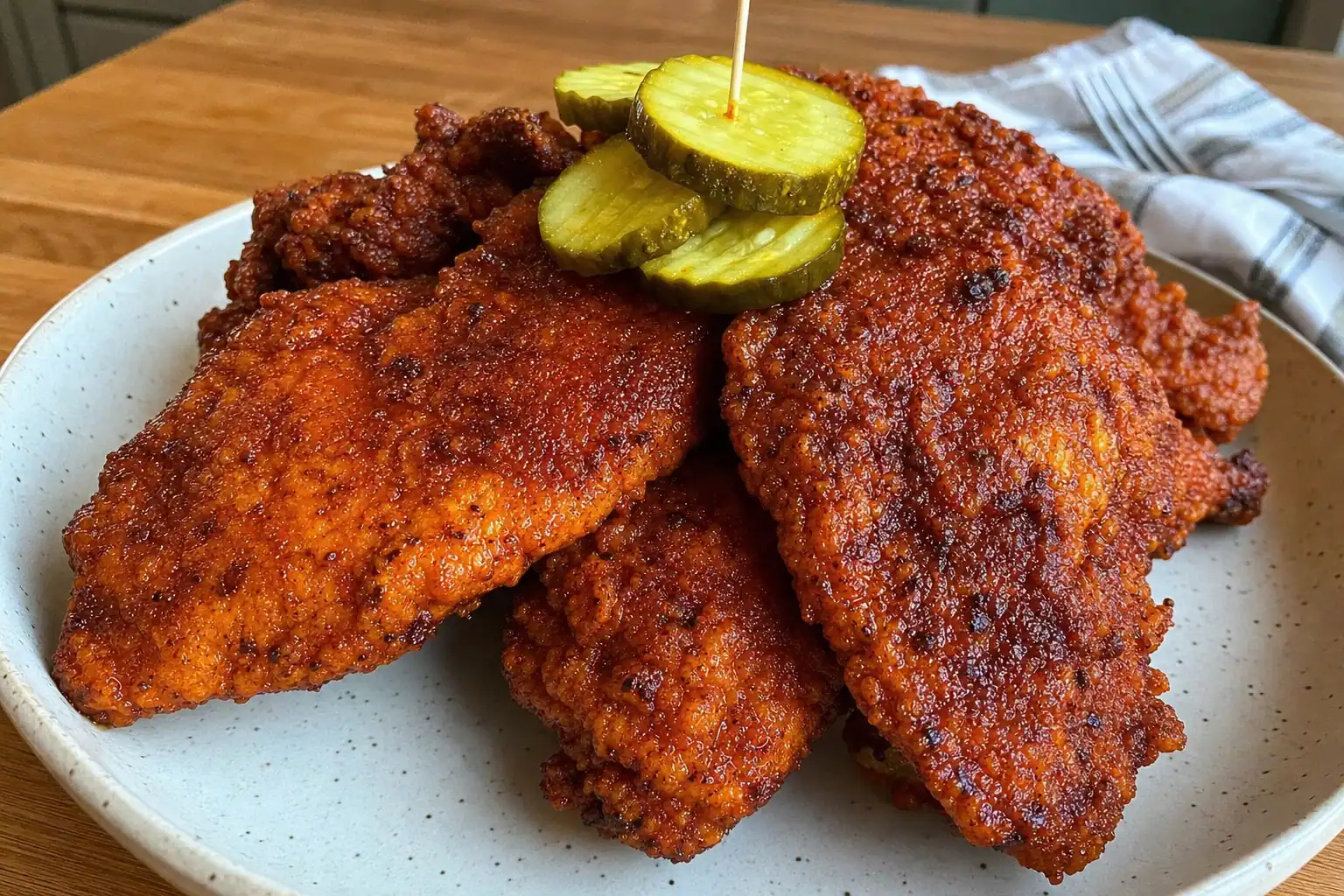
Nashville Hot Chicken
Crisp fried chicken gets brushed with a cayenne-spiced oil for the classic Nashville-style kick. Serve it on white bread with pickles to catch every spicy drip.
 Dinner
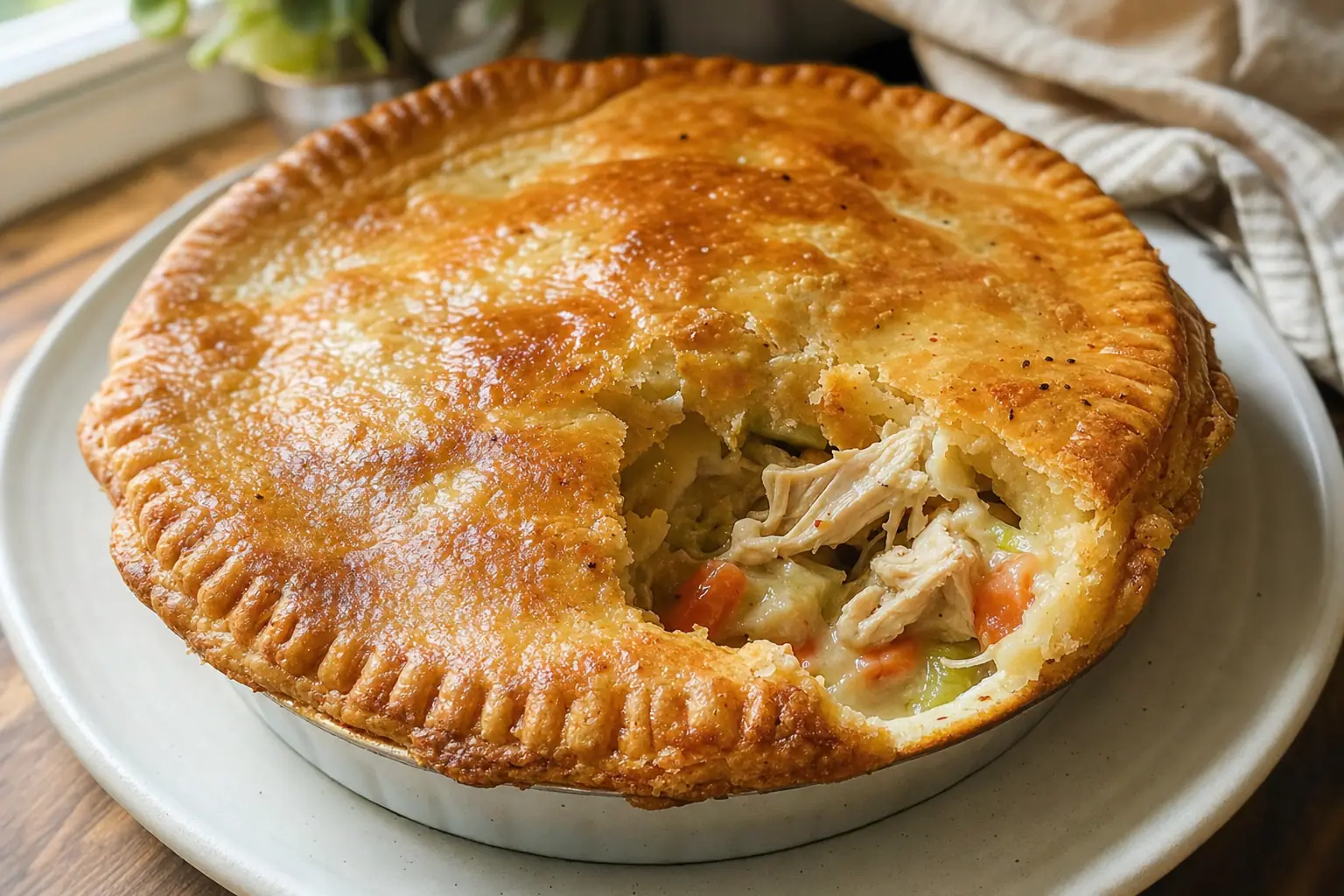
Chicken Pot Pie
This cozy chicken pot pie has a creamy vegetable filling tucked under a flaky crust. It uses cooked chicken, so it is a practical dinner for a chilly night or a smart way to turn leftovers into something generous.